
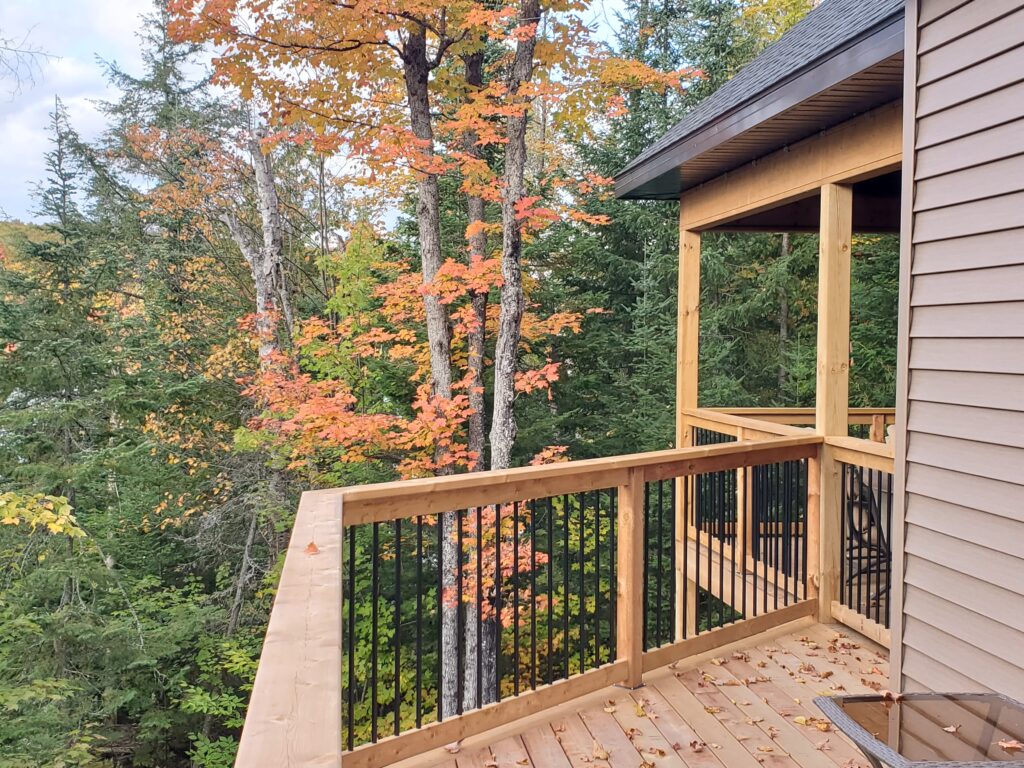
Cottages aren’t city houses. They deal with moisture, freeze–thaw cycles, shoreline exposure, DIY additions and seasonal use. My Cottage Inspection includes everything covered in a Home Inspection, with additional attention to the conditions commonly found in seasonal, waterfront, and rural properties throughout Haliburton County.
What’s Included
Structure & Foundation
- Visible foundation, piers, footings, and supports
- Floor, wall, and ceiling framing conditions
- Indicators of settlement, movement, rot, or moisture intrusion
- Post-and-beam and crawlspace structures common in cottages
Roof, Attic & Building Envelope
- Roof coverings, flashings, penetrations, and visible structure condition
- Attic insulation, ventilation, and heat-loss indicators
- Signs of leaks, staining, condensation, or ice-dam risk
- Windows, doors, siding, trim, and weather-sealing
Moisture & Thermal Imaging Checks
- Moisture meter readings in high-risk areas
- Thermal imaging utilized where appropriate to assist in identifying:
- Potential moisture concerns
- Insulation deficiencies
- Temperature anomalies
- Air leakage indicators
Thermal imaging spot-checks are included where conditions permit.
Electrical Systems
- Main service, panels, and visible wiring methods
- Bonding and grounding observations
- Sample testing of outlets, switches, and fixtures
- Observations regarding GFCI / AFCI protection where present and accessible.
Plumbing & Water Systems
- Visible supply and drain piping
- Fixture operation and drainage performance
- Water heater age, installation, and function
- Freeze-risk considerations common in seasonal properties
Heating, Ventilation & Cooling
- Furnace, boiler, heat pumps, or solid-fuel systems
- Venting, combustion air, and exhaust where accessible
- Basic operational testing where safely possible
Safety & Risk Areas
- Smoke and CO detectors
- Handrails, guardrails, and fall protection
- General safety hazards and trip risks
Exterior, Site & Accessory Structures
- Grading, drainage, and water movement near the structure
- Decks, stairs, porches, and railings
- Driveways and retaining walls
- Accessible sheds, bunkies, docks, and detached structures (visual review only)
Additional Cottage-Specific Focus
Cottage Inspections also include added attention to issues that don’t exist — or don’t matter as much — in city homes:
- Seasonal use and ventilation patterns
- Freeze–thaw stress on structures and systems
- Crawlspaces, piers, and shoreline exposure
- Winterization risks and access limitations
- Power outage considerations
How Your Inspection Is Performed
I inspect homes the way a builder evaluates a structure — understanding how systems interact, where failures begin, and what matters long-term. This isn’t a rushed walkthrough or a checkbox exercise.
During your inspection, I focus on:
I take the time needed to inspect thoroughly, explain findings clearly, and answer questions on site whenever possible.
Your Inspection Report
You’ll receive a clear, digital inspection report with labeled photos, explanations, and practical recommendations — delivered promptly so you can make informed decisions without guesswork or pressure.
Your report includes:
Photo-rich digital reports are typically delivered within 24 hours.
Optional Septic Tank Inspection
For clients seeking a more comprehensive evaluation of the septic system, we also offer a Complete Septic Tank Inspection as an optional add-on.
This service includes:
- Septic tank pump-out.
- Internal septic tank inspection following pump-out.
- Written septic system inspection report provided by the inspecting septic professional.
- Approximately one week’s notice is recommended.
Please note: A septic tank must be pumped before an internal inspection can be completed.
If it’s included in a Home Inspection, it’s included in a Cottage Inspection — with added focus on cottage-specific risks.
Why a Cottage-Specific Inspection Matters
Cottages age differently than year-round homes. Freeze–thaw cycles, shoreline exposure, DIY additions and seasonal use all create unique risks. My inspections focus on the issues most cottage owners overlook — giving you clarity before you commit.
Fully insured with Errors & Omissions (E&O) and General Liability coverage.
Our cottage inspections are tailored to seasonal and waterfront properties across Haliburton County — see our full Haliburton cottage inspection services.